Concrete floor installation in Forest Lake MN - a floor built for what goes on top
Planning a garage, shop or basement floor and not sure what goes under it? We build the slab around what you'll put on top.
What goes into a new concrete floor in Forest Lake?
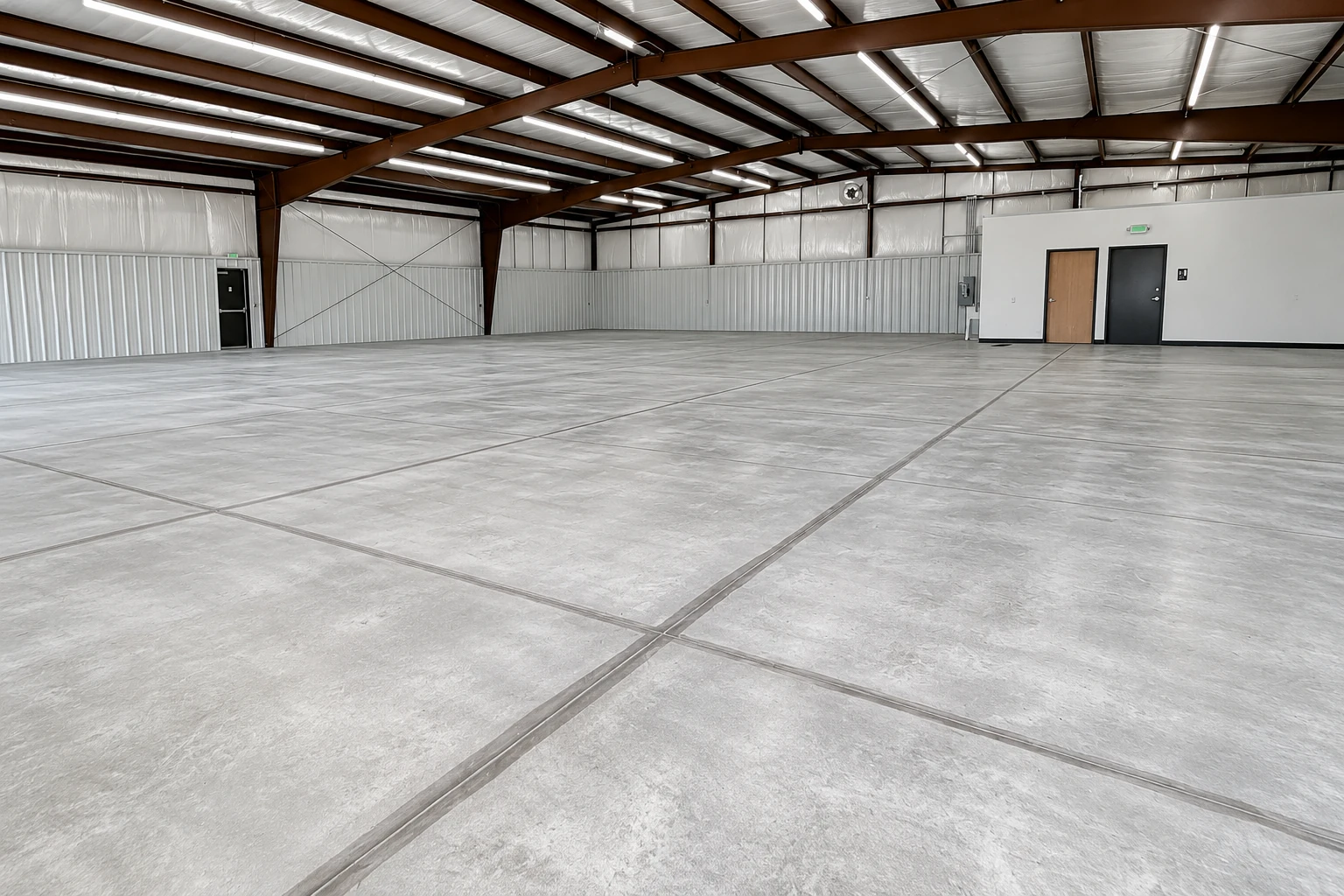
Concrete floor installation in Forest Lake means preparing the ground, setting the forms and any reinforcement the floor needs, then pouring and finishing the slab that becomes your garage, shop or basement floor. After a wait while it cures, you can walk on it, and later you can drive on it.
Usually it's a new garage floor, a shop, or the slab in a new house or addition, and the first thing people ask about is cost. The price moves with the size of the floor, how much digging and base work the site needs, whether the slab gets steel, and what goes under it, like a vapor barrier. The schedule depends on the weather in the days after the pour and on any permit or inspection, so before we set a date we check with the city and any other office the job touches. Your estimate gives you your own number, with what it covers written down.
How we handle concrete floor installation
Before we pour a floor, I ask what's going on top of it, whether that's a truck, a workbench, an epoxy coating, tile or carpet, because that tells us where the vapor barrier goes and how we lay out the joints. A vapor barrier is a plastic sheet that keeps ground moisture from coming up through the slab. Next we dig out and pack the subgrade, which is the soil the slab sits on, so the floor doesn't settle along with loose dirt underneath. We set the forms, lay any rebar the job calls for, since that steel holds the slab together if it cracks, and check the height so water runs out the door instead of toward a wall. We pour early in the day instead of in midday heat, which can leave a weak, dusty top. Then we finish the surface smooth or with a broom finish, a light texture that gives you grip. We cut control joints before the slab cracks on its own. Those are shallow grooves that give it a straight, planned place to crack. Then comes curing, the wait while the concrete gains strength, and we'll tell you when it's ready to walk on and when it's ready to drive on.
Why Forest Lake homeowners call Forest Lake Concrete for floors
You'll deal with the owner
I come out to look at the job and write the estimate myself, then I work on the crew that pours your floor. The person who heard what you need is there when it goes in.
Estimates that spell things out
I started this business in 2023 after learning the trade on a local crew, and I still remember not knowing the words, so I write down what the price covers in plain terms. You should understand what you're paying for before we start.
Based in Forest Lake, working nearby
We're based in Forest Lake and pour floors across the cities around it, including Hugo, Lino Lakes and Wyoming, plus others nearby. Our calls come from homeowners here and from small business owners planning a slab, so garages, shops and new-home floors are familiar work.
Fully licensed and insured
We're fully licensed and insured. Minnesota's Department of Labor and Industry requires a license from contractors who provide more than one special skill, and it treats digging and grading as a separate skill from pouring, so ask any crew that will do both whether they hold one.
On a floor, the part that matters most is the part nobody sees, the base and what's under the slab, so that's where I'd spend money before a fancier finish. Have the floor size, where it's going and a hoped-for pour date handy, then ask for your estimate or call (612) 448-0764.
Get a written estimate for your new concrete floor
Tell us the floor size, where it's going, like a garage or a new home, and when you'd like it poured. We reply within one business day to set a time, then I'll come out, walk the site with you and write up the estimate. It's free and there's no obligation.
Examples of finished concrete floors
Questions before you book a concrete floor
How much does a concrete floor cost in the Twin Cities?
A reinforced concrete slab in the Twin Cities usually costs about $8 to $13 per square foot, and that's the going rate around here, not our quote. Reinforced slabs run higher than plain pads, so the steel is part of that figure, and your number also moves with the size, the base work and what goes under the slab. We'll give you your own figure after we've walked the site.
Do I need a permit to pour a concrete floor in Forest Lake?
If the floor is going into a garage or shed over 200 square feet, yes, because Forest Lake requires a building permit with plan review for those. For any other floor, ask the city's building inspections office, which is part of the check we make before setting a date. On a garage, the state's guide lists a slab inspection once the forms and any reinforcement are in and before the pour, and Forest Lake needs at least 24 hours' notice for inspections, booked with city staff by phone only.
Does a new home in Minnesota need a radon system under the slab?
Yes, a new home built in Minnesota has to have a passive radon system, which draws radon gas from under the slab and vents it outside. It usually means gravel or sand under the slab that gas moves through easily, a soil-gas membrane on top of that and sealed openings in the floor, and the state requires permits and inspections for radon systems. In an existing house, a passive system is required only in an addition to a home that already has a code-compliant one.
Can you pour a concrete floor in cold weather in Minnesota?
Yes, as long as the fresh concrete is protected, because national concrete guidance says it freezes if its temperature drops below about 25°F, which weakens it and leaves it less durable. That protection is needed until about two days after the pour, so the forecast for the days after matters as much as pour day itself. If the cold won't let us protect it, we'd rather move the date.
How do I keep a new concrete floor from cracking?
You can't stop concrete from cracking entirely, but national trade guidance says well-planned joints, the grooves or breaks built into the slab, control where it cracks and keep the cracks small. That's why the better question for any contractor is where the joints will go, not whether the slab will crack. Ask to see the joint layout before the pour.
What is the best way to protect flooring or epoxy over a new concrete slab?
An industry floor guide reports that a vapor barrier placed directly against the underside of the slab gives floor coverings and coatings the most protection, so if you plan to cover or coat the floor, ask where the barrier will sit. New concrete also holds water after it's poured, and a new house can take many months or even years to reach balance with its surroundings, which shapes when finished floors go down.
Other concrete work that goes with a new floor
- Concrete pool decks
If you're putting in a pool, the deck around it needs a firm base, drainage away from the water and a surface that isn't slick under wet feet.
- Concrete steps construction
A new floor can change the height at a doorway, and properly sized concrete steps give you a safe, solid way in and out of the garage or house.